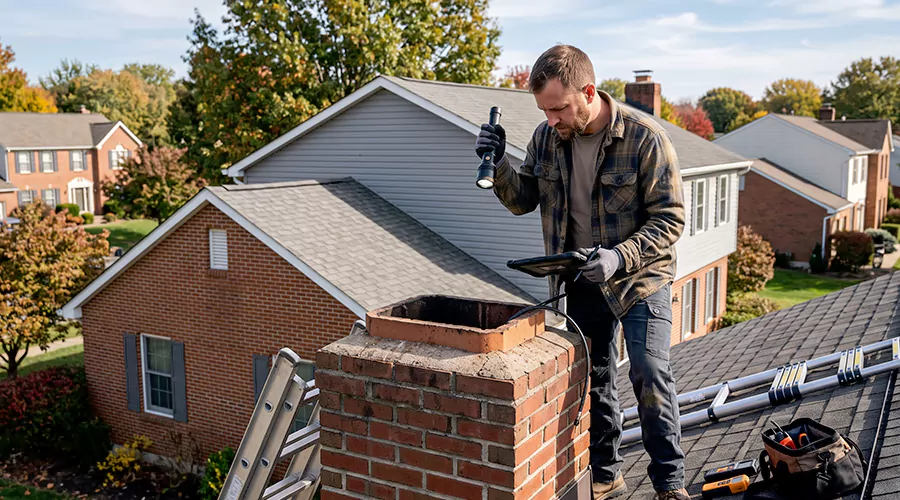
Signs Your Chimney Needs an Inspection
Learn the key chimney warning signs homeowners should never ignore, including water leaks, debris, odd odors, and changes in fireplace performance.




Based on 500+ Reviews

Proudly American
Owned & Operated

A chimney inspection helps identify problems that may not be visible during normal fireplace use. While regular inspections are recommended for chimney maintenance, certain warning signs indicate that an inspection should be scheduled sooner, especially when heavy buildup or residue suggests that professional soot removal may be needed.
Cracks, leaks, unusual odors, smoke problems, and changes in fireplace performance can all point to issues inside the chimney system. Detecting these problems early can help prevent more expensive repairs and improve fireplace safety.
A chimney is exposed to heat, moisture, weather changes, and combustion by-products. Over time, these conditions can affect:
Many chimney problems develop slowly. By the time visible damage appears, the underlying issue may already require repair.
Recognizing early warning signs allows homeowners to address problems before they become more serious.
One of the clearest signs that a chimney needs inspection is smoke entering the living space instead of flowing upward through the chimney.
Smoke problems may indicate:
A properly functioning chimney should direct smoke safely outside. If smoke repeatedly enters the room, the system should be evaluated.
A fireplace may have a mild smoky smell after use, but strong or unusual odors can indicate a problem.
Common causes include:
A strong odor, especially when the fireplace is not being used, may indicate that the chimney needs inspection.
Cracks are one of the most common signs of chimney deterioration.
Check for:
Exterior cracks can allow water to enter the chimney structure. Interior cracks in the flue may also affect how safely smoke and heat are contained.
Water stains near the fireplace or chimney area often indicate moisture intrusion.
Signs of chimney water problems include:
Possible sources include:
A chimney inspection can help identify where moisture is entering.
White powdery stains on chimney masonry are known as efflorescence.
These stains appear when water moves through masonry and leaves mineral deposits behind as it evaporates. Regular fireplace cleaning can help remove surface residue and keep the surrounding masonry looking cleaner.
Efflorescence may indicate:
While white staining does not always mean severe damage, recurring efflorescence should be evaluated.
The chimney cap protects the chimney opening from rain, debris, and animals.
A damaged cap can allow:
Signs of chimney cap problems include:
A missing or damaged cap can accelerate chimney deterioration.
Wood-burning fireplaces produce smoke particles that can collect inside the chimney as creosote.
Signs of excessive buildup include:
Heavy creosote accumulation can affect chimney performance and should be evaluated during inspection.
Finding debris inside the firebox can indicate internal deterioration.
Possible sources include:
Small pieces may seem harmless, but they can indicate that parts of the chimney system are breaking down.
A chimney relies on proper airflow to move smoke outside.
Draft problems may appear as:
Possible causes include:
An inspection can help determine the reason behind poor draft.
After any chimney fire, an inspection is necessary before using the fireplace again.
A chimney fire can damage:
Some damage may not be visible from outside, which is why a detailed evaluation may be needed.
Animals can enter chimneys when caps or screens are damaged.
Warning signs include:
Animal nests can restrict airflow and create ventilation problems.
The chimney crown sits at the top of many masonry chimneys and helps direct water away.
Signs of crown problems include:
A damaged crown allows water to enter the chimney and can contribute to masonry damage.
Any major change to a fireplace or heating system may require a chimney inspection.
Examples include:
Changes can affect whether the existing chimney is suitable for continued use.
A chimney inspection may include checking:
| Area | What Is Evaluated |
|---|---|
| Firebox | Cracks and damage |
| Damper | Operation and condition |
| Flue | Cracks and buildup |
| Exterior masonry | Bricks and mortar |
| Crown | Water protection |
| Cap | Damage and blockage |
| Flashing | Roof leaks |
The inspection level depends on the condition of the chimney and whether any changes or concerns exist.
Most chimneys should be inspected at least once a year.
Additional inspections may be needed after:
Regular inspections help identify issues before they become larger problems.
Signs that your chimney needs an inspection include smoke problems, unusual odors, water leaks, visible cracks, damaged chimney components, excessive creosote, poor draft, and debris falling into the fireplace.
A chimney can have hidden problems that are not visible from the outside. Regular inspections help identify damage inside the flue, deterioration of masonry, and ventilation issues before they create larger repair needs.
If you notice changes in fireplace performance or visible chimney damage, an inspection is the best way to understand the condition of the system.
Signs include smoke entering the room, water leaks, cracks, unusual odors, poor draft, and visible masonry damage.
Yes. Hidden issues such as flue cracks, internal blockages, and liner damage may not be visible from outside.
Yes. Severe weather can damage chimney caps, crowns, flashing, and masonry.
Most chimneys should be inspected once a year, even if they appear to be working normally.
Not always, but it can indicate draft problems, blockages, buildup, or other issues that require evaluation.
Some small cracks may only require minor repairs, but larger cracks or spreading damage should be inspected to determine the cause.
Learn the key chimney warning signs homeowners should never ignore, including water leaks, debris, odd odors, and changes in fireplace performance.
